Market Day or Seasonal Fair: Two Kinds of Local Gathering
Market day or seasonal fair: learn how each gathering’s rhythm shapes what you can notice, and plan a visit that leaves room for its distinct pace.
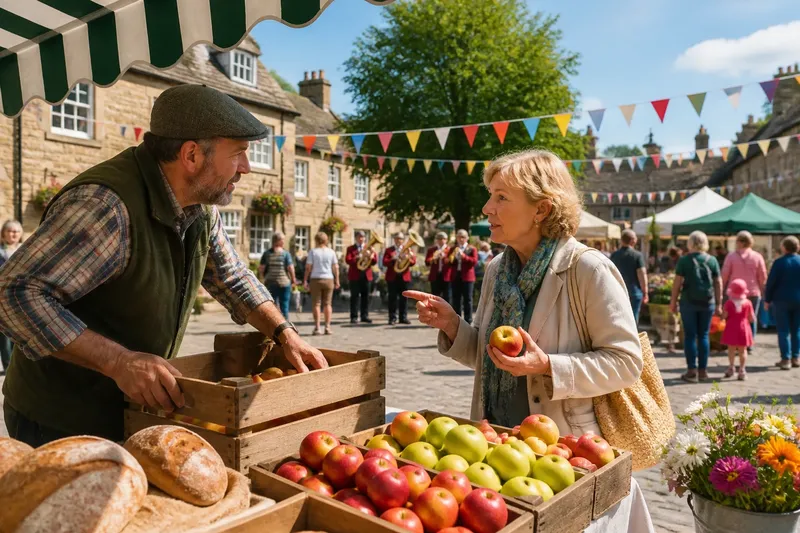
At a village market, a stallholder is already packing away a crate while a customer asks which apples will keep. At a seasonal fair, the same square may be filling with bunting, a brass band and people who have come as much to meet one another as to buy. A market day or seasonal fair can occupy the same place, but its rhythm changes what a visitor is likely to notice and how much time to leave.
Different clocks
A recurring market is part of the local week. Residents may arrive with a shopping list, a familiar bag and a short gap before work or the school run. Sellers bring stock to shift, not simply to display. The ordinary purpose gives the event its pace: transactions, greetings, small updates, then on to the next errand.
A seasonal fair, by contrast, gathers around a particular point in the year. Its attractions may include craft stalls, rides, demonstrations, music or a procession. The calendar gives it an occasion-like feel, and visitors may stay to watch something rather than finish a purchase. There is often more to see, but the crowd’s attention moves in waves around a programme.
Neither rhythm is more authentic. A busy market can be deeply social, and a fair can be a straightforward place to buy a pie. The useful distinction is what the event is organised to do most often: support a repeating routine, or mark a season with a temporary gathering.
What repetition reveals
At a market, repetition makes small changes legible. You might notice which growers bring cut flowers in spring, when a particular fishmonger appears, or how the layout shifts after a stallholder leaves. Returning visits reveal the working pattern of the place: who sets up early, which corners collect conversation, and what people buy without stopping to browse.
Those observations usually come in fragments. A seller may be busy; a regular may greet three people before reaching the bread stall. The market’s local knowledge is not necessarily offered as a display. It is carried in the practical details: handwritten signs, reusable boxes, a familiar queue and the products that appear only when conditions allow.
For a visitor, that makes a market better suited to patient looking than to expecting a performance. Buy something if you genuinely want it, leave room for people who are doing their weekly shopping, and ask a concise question when a stallholder is free.
Notice the small routines before looking for a grand local story.
What a fair reveals
A fair tends to make collective life more visible. A local club may run a tombola; a school group may sell cakes; a craft worker may demonstrate a method beside finished pieces. Temporary signs and hired equipment show how many organisations can make one event happen. The gathering often presents a place not as a catalogue of goods, but as a network of people prepared to put on a day together.
Its seasonal timing matters. A harvest fair, a summer fête and a winter market are not interchangeable, even if each has stalls. Weather, daylight, school holidays and the local calendar shape who attends and what activities make sense. A visitor can often notice this in practical choices: shelter near food, a timetable for performances, or a children’s activity placed away from the busiest path.
Fairs also ask for more flexibility. A procession can temporarily close a route; a queue for food can grow just as a demonstration begins. The programme provides a useful outline, not a promise that every part of the day will unfold on cue. Leave some space between planned stops.
Planning a visit?
When is a market busiest?
It depends on the town, the season and the market’s role in local shopping. Check the organiser’s current notice, then consider arriving early for easier browsing or later if you want to see which stalls remain once the main rush has passed.
How long should I allow?
For a market, allow enough time to make a circuit and pause without blocking a stall or walkway. A fair may need a longer, looser visit if you want to catch a scheduled event, eat there or look around several activity areas.
Should I bring cash?
Payment options vary by stall, so carry a sensible alternative to a card if that suits you. A small amount of cash can be useful for modest purchases, while checking current event information may clarify whether particular facilities are available.
Can I take photographs?
Wide views of stalls may be less intrusive than close images of sellers or visitors. Ask before photographing someone at work, and avoid standing in a trading space or interrupting a conversation to get a picture.
Make time fit
Start with the event’s purpose, then plan around it. For a regular market, identify the opening period and any stalls or goods you particularly hope to see. If you have a train or bus to catch, check the return service separately; a market’s familiar local schedule does not necessarily match a visitor’s travel window.
For a fair, look for a programme, map and access information from the organiser. Mark one or two things you would be disappointed to miss, then keep the rest open. If the event is spread across a park or several streets, note where the quieter exits and seating areas are before the busiest moment arrives.
Say you reach a market with forty minutes before a bus. If you decide in advance to make one circuit, buy bread from a stall you have already spotted, and leave a few minutes to reach the stop, the visit has a clear shape without turning every conversation into a race. At a fair, the equivalent plan might be to catch one craft demonstration and then browse the food stalls, rather than trying to cover every attraction.
- Check the date and opening hours with the event organiser.
- Look for a map, programme or public transport notice.
- Choose one main interest, such as produce, crafts or a performance.
- Leave room for queues, conversation and changing weather.
- Keep walkways clear and follow any requests from stallholders or stewards.
- Decide where to meet companions if the gathering is crowded.
Event details and facilities can change, so use the organiser’s current information where it matters.
Read the setting
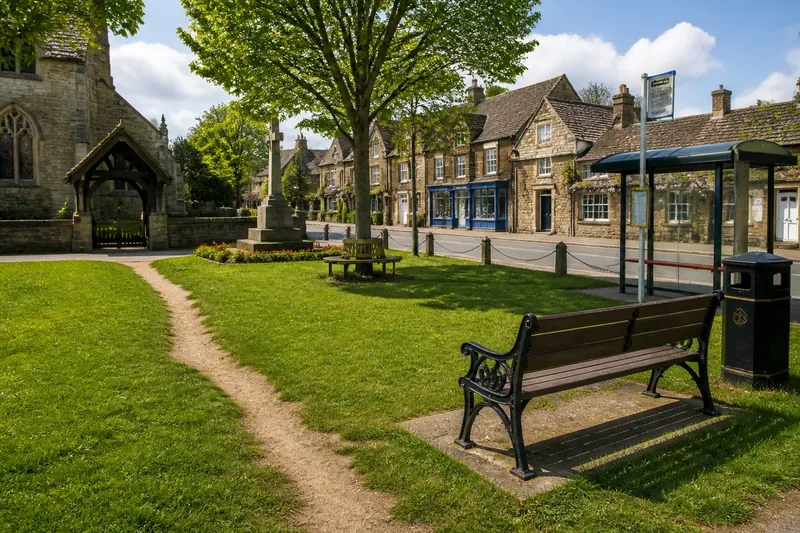
The same street can feel quite different under a weekly market and a seasonal fair. At market time, look at how stalls fit around ordinary access: shop doors, deliveries, bus stops and the route people take across the square. At a fair, notice what has been temporarily added and how visitors are directed between it. The contrast shows how a place accommodates routine commerce and a shared occasion without requiring either to explain the whole community.
Visitors can help preserve that distinction by behaving according to the setting. At a market, keep purchases and questions practical when sellers are serving a queue. At a fair, check where children’s activities, performances and food lines begin before stopping to watch. In either case, buy only what you can use, take litter to the proper bins and let local residents get on with their day.
A market day or seasonal fair is easiest to enjoy when the plan respects its own clock: allow a market to reveal its repeated habits, and give a fair enough slack for its shared interruptions. The most useful thing to bring is not a packed itinerary but a little unclaimed time.